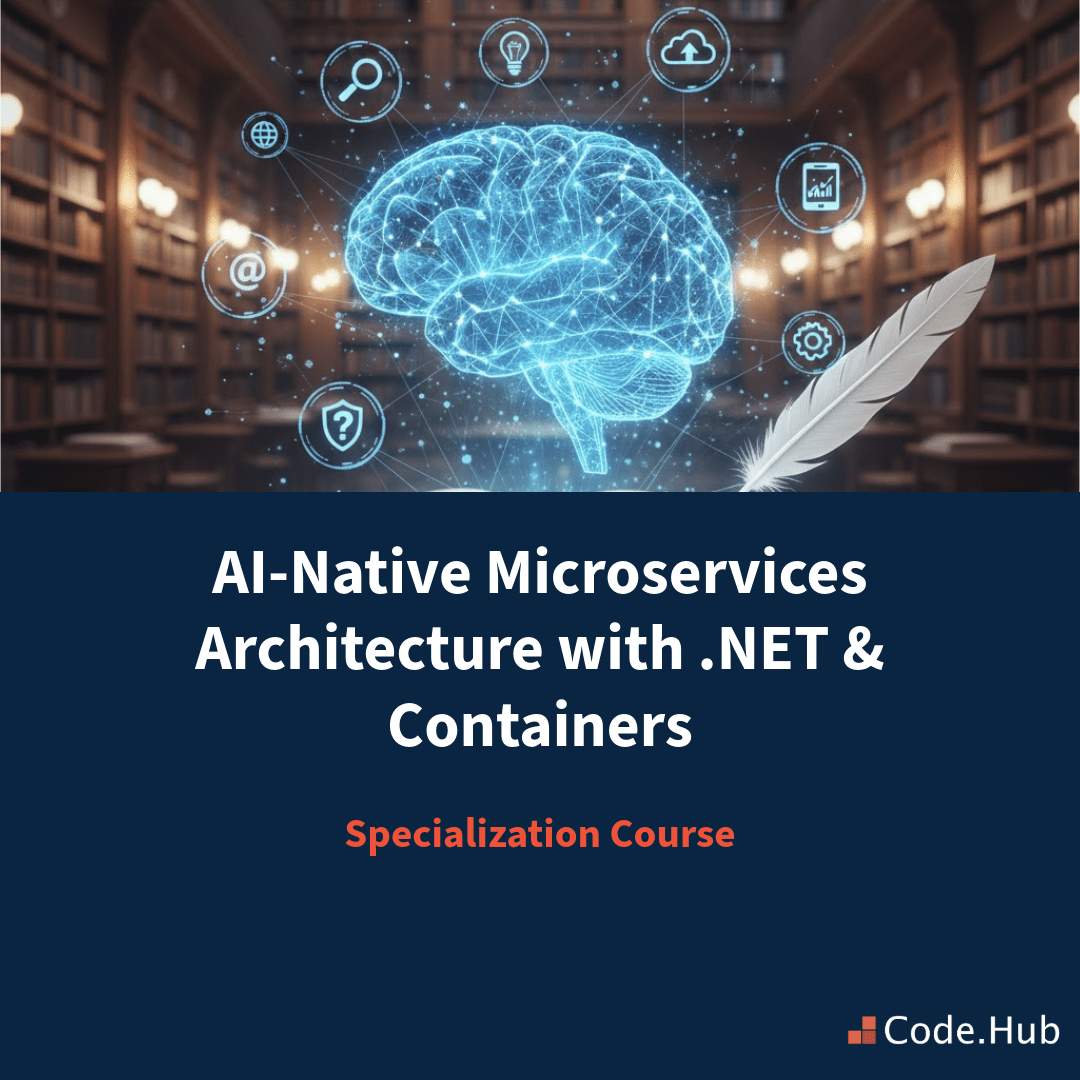
AI Engineering for Intelligent .NET Systems: RAG, Agents & Enterprise Integration
Description
This course explores how to design and build intelligent, AI-powered applications within .NET ecosystems using modern techniques such as Retrieval-Augmented Generation (RAG), agent-based workflows, and enterprise-grade AI integration. Participants will learn how to extend ASP.NET Core systems with large language models, connect AI to structured and unstructured data sources, and orchestrate multi-step reasoning using agents. The course emphasizes practical implementation using Azure OpenAI, Semantic Kernel, and vector-based retrieval, enabling the development of scalable, secure, and production-ready AI features. Through hands-on exercises, learners will build end-to-end intelligent services that go beyond traditional APIs.
🕒 Duration: 8 hours
👥 Target Audience:
- Software Engineers/ Architects (.NET, Backend, Full stack), DevOps / SRE Engineers, CTOs / Engineering Managers
- Seniority: Mid-Senior
Webinar Content
| Module 1: AI System Architecture in .NET Introduction to LLMs & Enterprise Integration From APIs to Intelligent Services | Foundations of AI-powered systems |
|
| Module 2: Retrieval-Augmented Generation (RAG) Data Integration (SQL + Documents) Embeddings & Vector Search | Building RAG pipelines |
|
| Module 3: Agent-Based Systems Semantic Kernel / Agent Frameworks Tool Usage & Multi-step Reasoning | Designing agent workflows |
|
| Module 4: Enterprise Integration & Evaluation Security & Responsible AI AI System Testing & Optimization | Production readiness & evaluation |
|
Learning Objectives:
After attending this webinar participants will be able to:
- Design and implement AI-powered APIs using ASP.NET Core
- Build RAG pipelines integrating SQL Server and vector search
- Develop agent-based workflows using Semantic Kernel or similar frameworks
- Integrate Azure OpenAI securely within enterprise architectures
- Evaluate and improve AI system responses and reliability
Prerequisite Knowledge
- Experience with .NET (ASP.NET Core Web APIs) and basic database concepts
- Familiarity with REST APIs and general software architecture