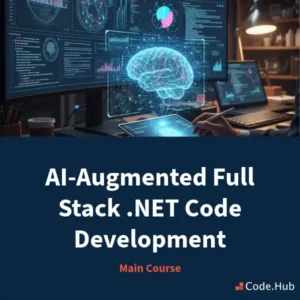
AI-Augmented Full Stack .NET Code Development

Description

This training enables developers to build fullstack .NET applications enhanced with Generative AI to accelerate development and embed intelligent capabilities into modern web systems. Participants will learn how to use AI copilots to generate, refactor, and test code across backend (ASP.NET Core) and frontend (React/Angular) layers. The course covers integrating LLMs into applications for features such as natural language interfaces, recommendation engines, and intelligent workflows. It also explores end-to-end architectures combining .NET APIs, databases, and AI services like Azure OpenAI. Hands-on labs focus on building production-ready applications with AI-assisted coding, automated documentation, and rapid prototyping. Emphasis is placed on clean architecture, security, and maintainability when introducing AI into fullstack systems. By the end of the training, participants will be able to design and implement scalable, AI-augmented applications across the entire development lifecycle.

Indicative Duration: 18 training hours
*Duration is adjusted based on the final scope and the target audience.


Scope

1. Introduction to AI in Development
1.1 Fundamentals of
Generative AI
โ€ข What is Generative AI and LLMs
โ€ข How AI assists developers (Copilots)
โ€ข Overview of AI in software development lifecycle
โ€ข Real-world use cases in web applications
1.2 AI Tools for Developers โ€ข GitHub Copilot basics
โ€ข Using AI in Visual Studio / VS Code
โ€ข Prompting techniques for code generation
โ€ข Limitations and best practices
2. .NET Fullstack
Foundations Refresher
2.1 ASP.NET Core Basics โ€ข Web APIs fundamentals
โ€ข Controllers, routing, and middleware
โ€ข Basic CRUD operations
2.2 Frontend Integration โ€ข Overview of React or Angular
โ€ข Calling APIs from frontend
โ€ข Basic UI components and state
3. AI-Assisted Coding in .NET
3.1 Code Generation &
Refactoring
โ€ข Using Copilot for backend code
โ€ข Generating APIs and services
โ€ข Refactoring and improving code quality
3.2 Debugging & Testing
with AI
โ€ข AI-assisted debugging
โ€ข Writing unit tests with AI
โ€ข Improving code reliability
4. Integrating AI into Applications
4.1 Calling LLM APIs โ€ข Introduction to Azure OpenAI / OpenAI APIs
โ€ข Making API calls from .NET
โ€ข Handling responses
4.2 Building AI Features โ€ข Creating simple chat functionality
โ€ข Natural language input handling
โ€ข Prompt design basics
5. Fullstack AI Application Development
5.1 Connecting Frontend
with AI Backend
โ€ข Sending user input to backend
โ€ข Displaying AI responses in UI
โ€ข Managing async interactions
5.2 Intelligent UI Patterns โ€ข Chat-based interfaces
โ€ข AI-assisted forms and suggestions
โ€ข Improving UX with AI
6. Data & Persistence Layer 6.1 Working with Databases โ€ข Connecting .NET to SQL Server
โ€ข Basic data storage and retrieval
โ€ข Using AI to generate queries
7. Automation & Productivity 7.1 AI for Developer Workflow โ€ข Auto-generating documentation
โ€ข Code snippets and templates
โ€ข Using AI for faster development cycles
8. Capstone Project 8.1 Build AI-Augmented
Web App
Create fullstack app with AI feature
โ€ข Example: AI assistant or recommendation system
โ€ข End-to-end integration (frontend + backend + AI)
โ€ข Testing and improvements


Learning Objectives

Upon completion of the course participants will be able to:

  1. Develop fullstack .NET applications using AI copilots for faster coding and refactoring
  2. Integrate LLM-powered features such as chat, recommendations, and intelligent workflows
  3. Design end-to-end architectures combining ASP.NET Core, frontend frameworks, and AI services
  4. Automate testing, documentation, and development workflows using AI tools
  5. Apply best practices for secure, scalable, and maintainable AI-augmented applications

Target Audience

  • Roles: Fullstack Developer, .NET Developer, Software Architect
  • Seniority: Junior to Mid level

Prerequisite Knowledge

  • Experience with C#, ASP.NET Core, and at least one frontend framework (React or Angular)
  • Familiarity with REST APIs, databases, and general fullstack application architecture

Delivery Method

Sessions can be delivered via the following formats:

  • Live Online โ€“ Interactive virtual sessions via video conferencing
  • On-Site โ€“ At your organizationโ€™s premises
  • In-Person โ€“ At Code.Hubโ€™s training center
  • Hybrid โ€“ A combination of online and in-person sessions